Final Year Project
My Major Research Topic is Digital Tools Overload and the Design Crisis. While digital tools were originally introduced to enhance productivity and creativity, their rapid growth is now contributing to fatigue in design education. Design students often feel pressured to master multiple programs, such as Photoshop, Illustrator, and InDesign, at a fast pace, which can hinder meaningful creative exploration and the development of a personal design style. This constant switching between software disrupts the creative flow, encouraging students to focus on technical proficiency rather than deep conceptual thinking and original design development.
Sep 23, 2025
CLIENT
Sunway University
CLIENT
Sunway University
CLIENT
Sunway University
Role
Graphic Design
Role
Graphic Design
Role
Graphic Design
Service
Creative Design Solution
Service
Creative Design Solution
Service
Creative Design Solution
Project Progress
Project Progress
Project Progress
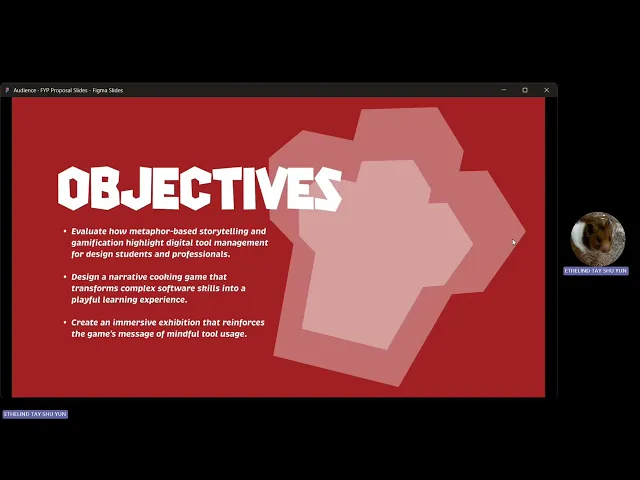
Final Year Project Proposal Video
This video includes the concept, objectives, deliverable for my final year project.
Game Prototype: https://www.figma.com/proto/gGeVemYyW4dYYaCzqZURL9/Final-Year-Project?page-id=331%3A2112&node-id=1247-48557&viewport=-119%2C377%2C0.08&t=zYfM6tz1hlkmSArq-1&scaling=scale-down&content-scaling=fixed&starting-point-node-id=1247%3A48557
Week 1
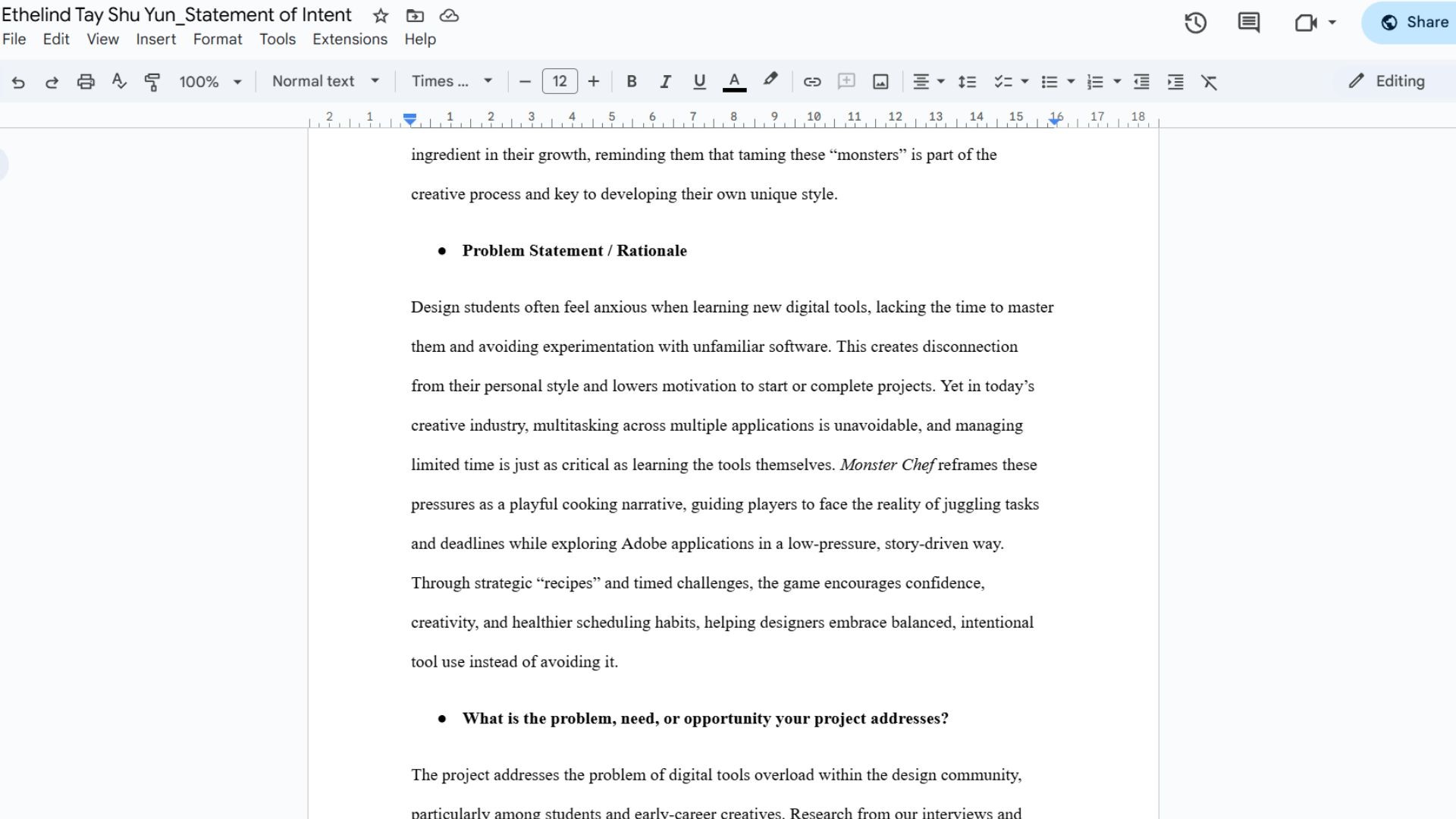
This week, we began by brainstorming the design direction for our Final Year Project, building on insights from our Major Research Project. We completed the Statement of Intent to outline the problem statements and project objectives clearly. My concept focuses on creating a narrative cooking game that personifies the challenge of digital tool overload. The game turns the stress of mastering multiple design applications into a relatable, story-driven metaphor, portraying the designer as a chef and each Adobe application as a distinctive “monster chef.” (For more details, see the Statement of Intent link.)
Lecturer Feedbacks:
-Problem statement should mention that in today’s creative industry, multitasking across multiple applications is unavoidable, and managing limited time is just as critical as learning the tools themselves.
-Objectives should be clear that it is to highlight the importance of digital tools management and priorities.
-Next step is to create a framework and try to align the framework to the problem statement, think of the game structure and get feedbacks from different people.
Statement of Intent: https://docs.google.com/document/d/1sSNl_UFEG7dpBuosEz7GybiZBBvL04WiuE8hAE8OQWk/edit?usp=sharing
Week 2
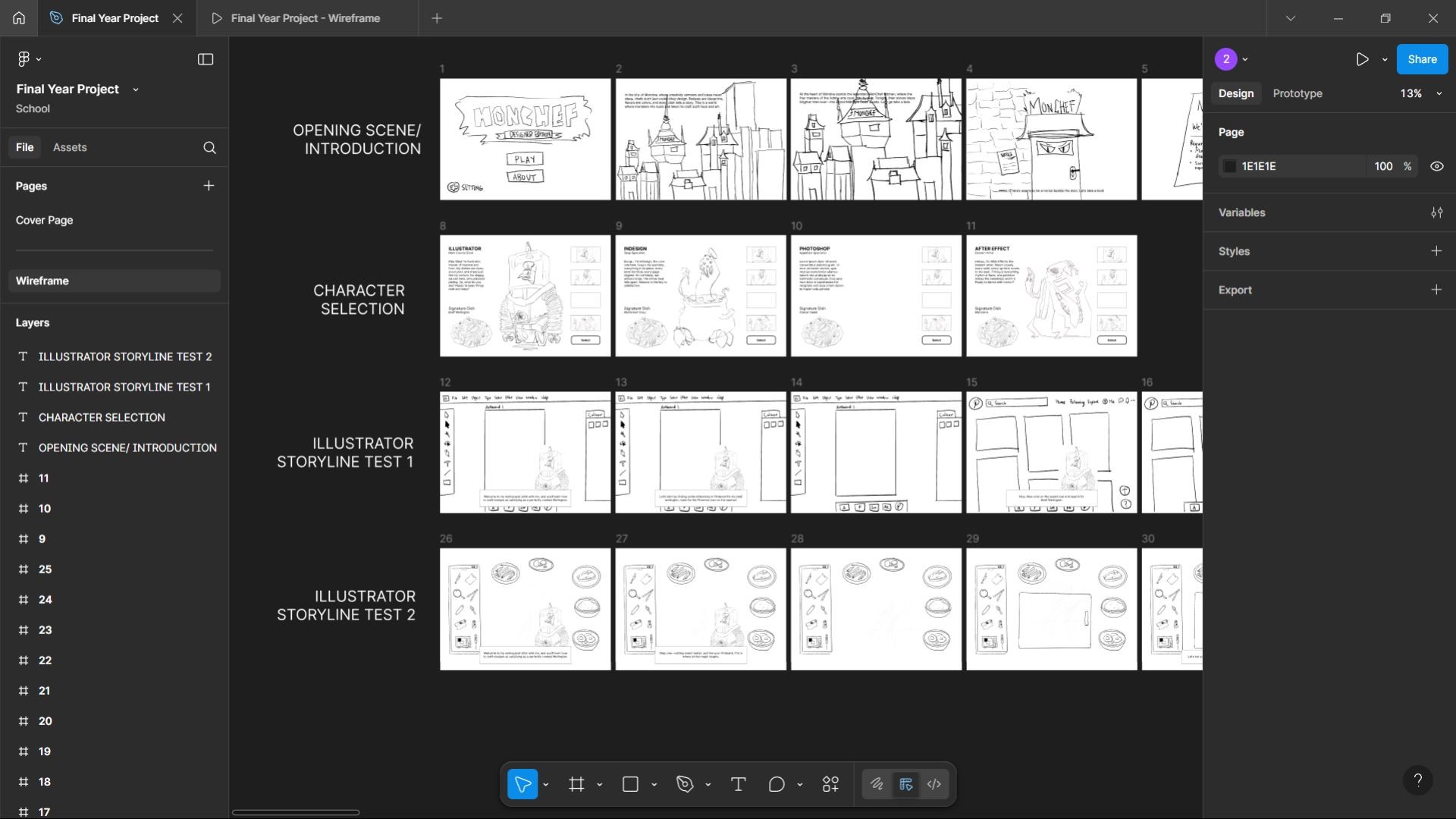
I have created basic wireframes and prototype drafts in Figma, along with character sketches and detailed personality profiles. I also worked on structuring the storyline. In addition, I revised my problem statement and objectives based on the feedback received from last week’s consultation with my lecturer.
Lecturer Feedbacks
-Characters could feature multicultural dishes instead of only Western dishes.
-Since the characters and elements are inspired by Adobe tools, an ethical clearance form should be written and approved by Adobe. Alternatively, consider developing your own branding as a backup plan if approval is not granted.
-The gameplay can shift visually—for example, Illustrator’s process could begin realistically and then transform into vectors once it reaches the artboard. Similarly, other Adobe apps can transform into their respective visual styles to highlight their unique functions.
-Develop a storyline that shows how all the characters and tools work together in the end.
-Include limitations in the Statement of Intent if necessary.
-Consider strategies to sustain player engagement and encourage replayability—such as allowing players to export the final image after completing a signature dish.
-Character designs should be more distinct, clearly representing the apps. For instance, Illustrator’s robot design could incorporate symbols or logos that reinforce its identity.
Next Progress
-Finalize all character designs.
-Complete the remaining structure and storyline.
Week 3
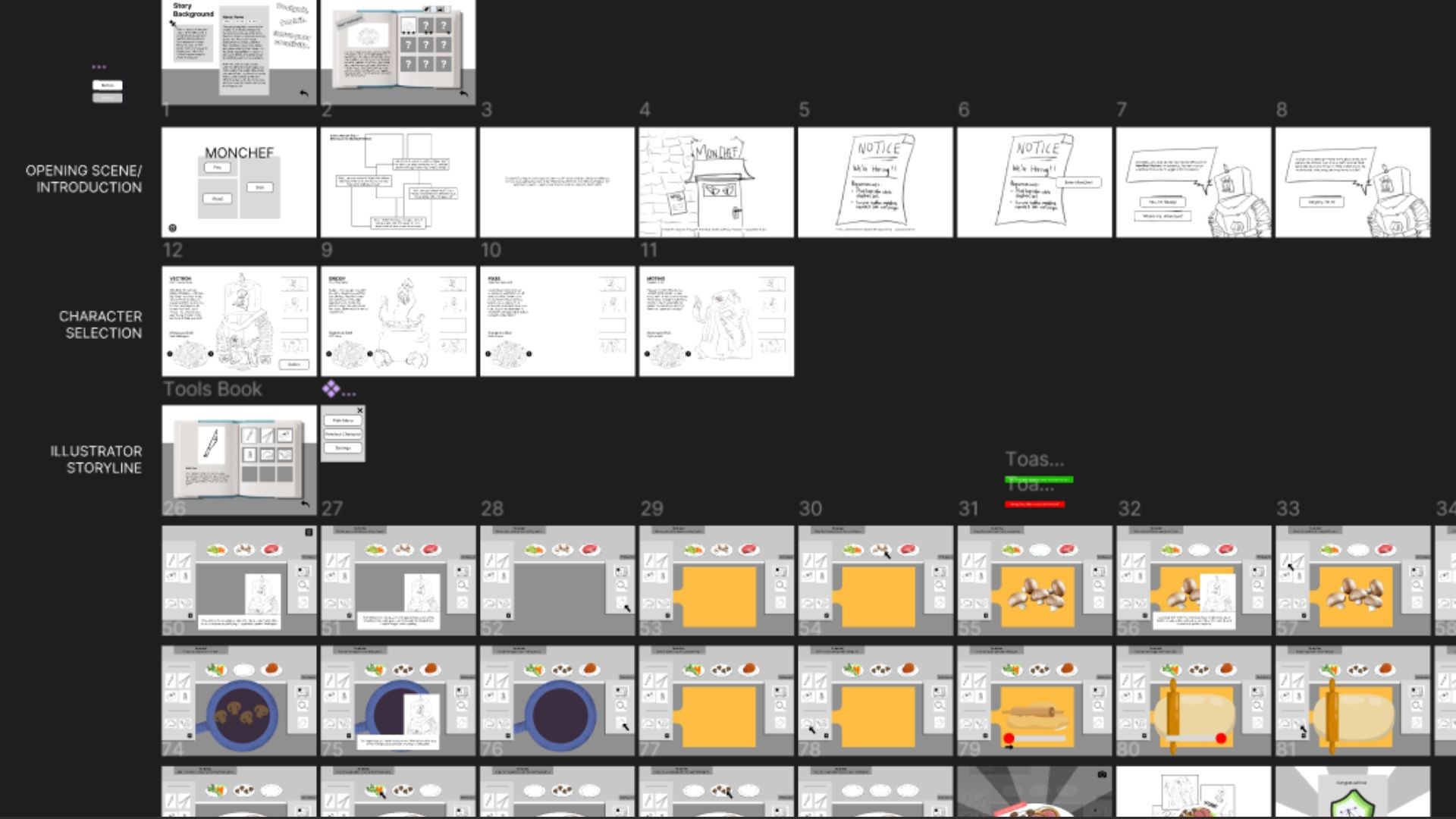
I refined the opening scene storyline and developed a more detailed prototype for the Illustrator chapter. Additionally, I brainstormed and sketched storyline concepts for the remaining three characters — InDesign, Photoshop, and After Effects.
Lecturer Feedbacks
-Add timing to the “image → vector” transformation to show it “cooking” onscreen.
-Increase the free-play or sandbox component to improve playability.
-Make instruction arrows more noticeable—perhaps blinking or otherwise emphasized.
-Enhance interaction transitions; make them smoother and more responsive.
-Improve workspace layout so that character dialogues don’t block essential UI elements.
-Reduce text heaviness—try to streamline instructions and narrative.
-Provide an option at the beginning: play the full game with all four characters/apps, or just one. The full-game mode might be called “Campaign Dish” to reflect its larger scope.
-Include a scoring or leveling system if possible.
-Create more interesting, culturally rich names for each dish.
-Consider renaming “Nyonya Kuih” to something like “Nyonya Chitty Kuih” to better reflect multicultural (Indian, Malay, Chinese) influences.
Week 4
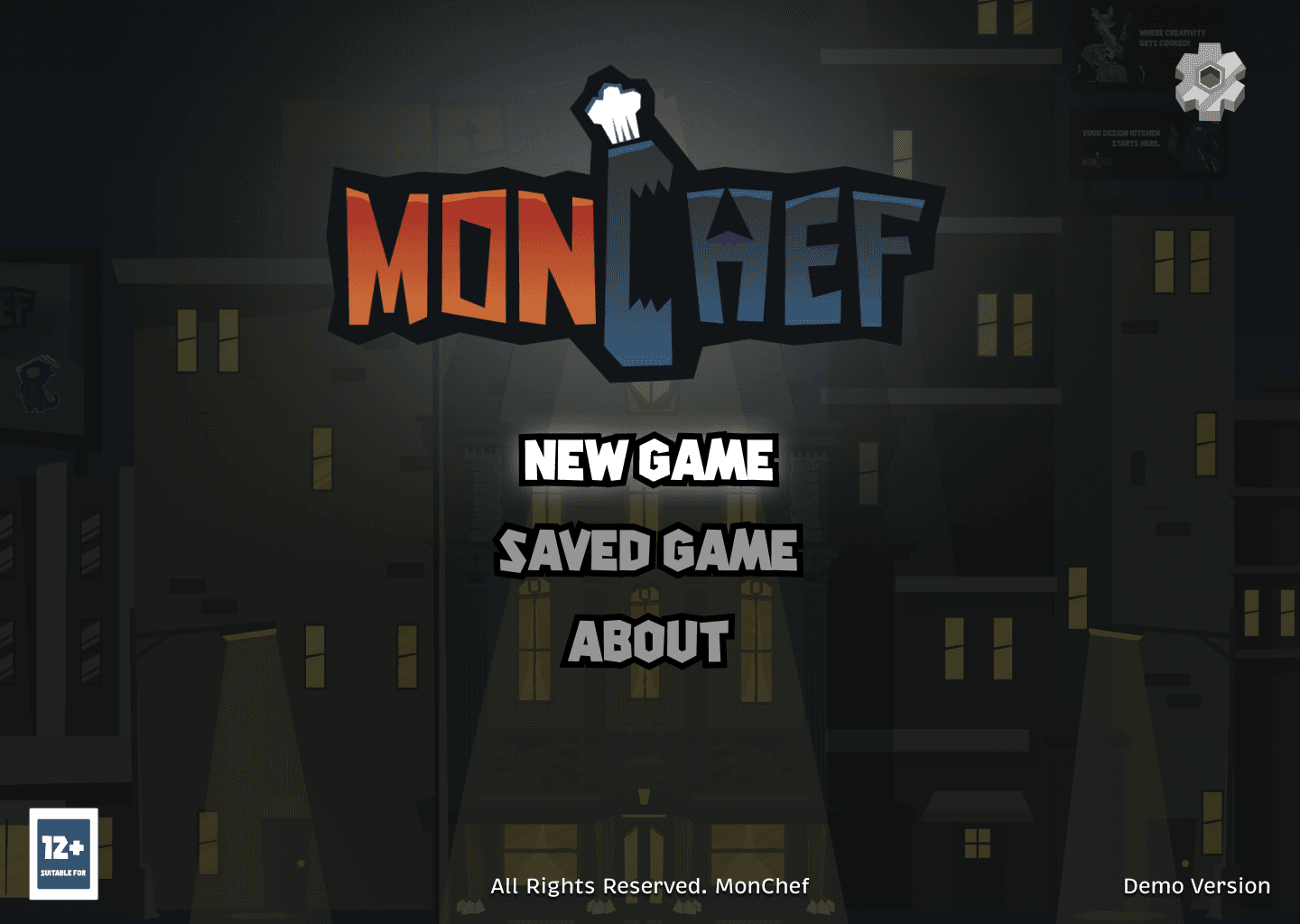
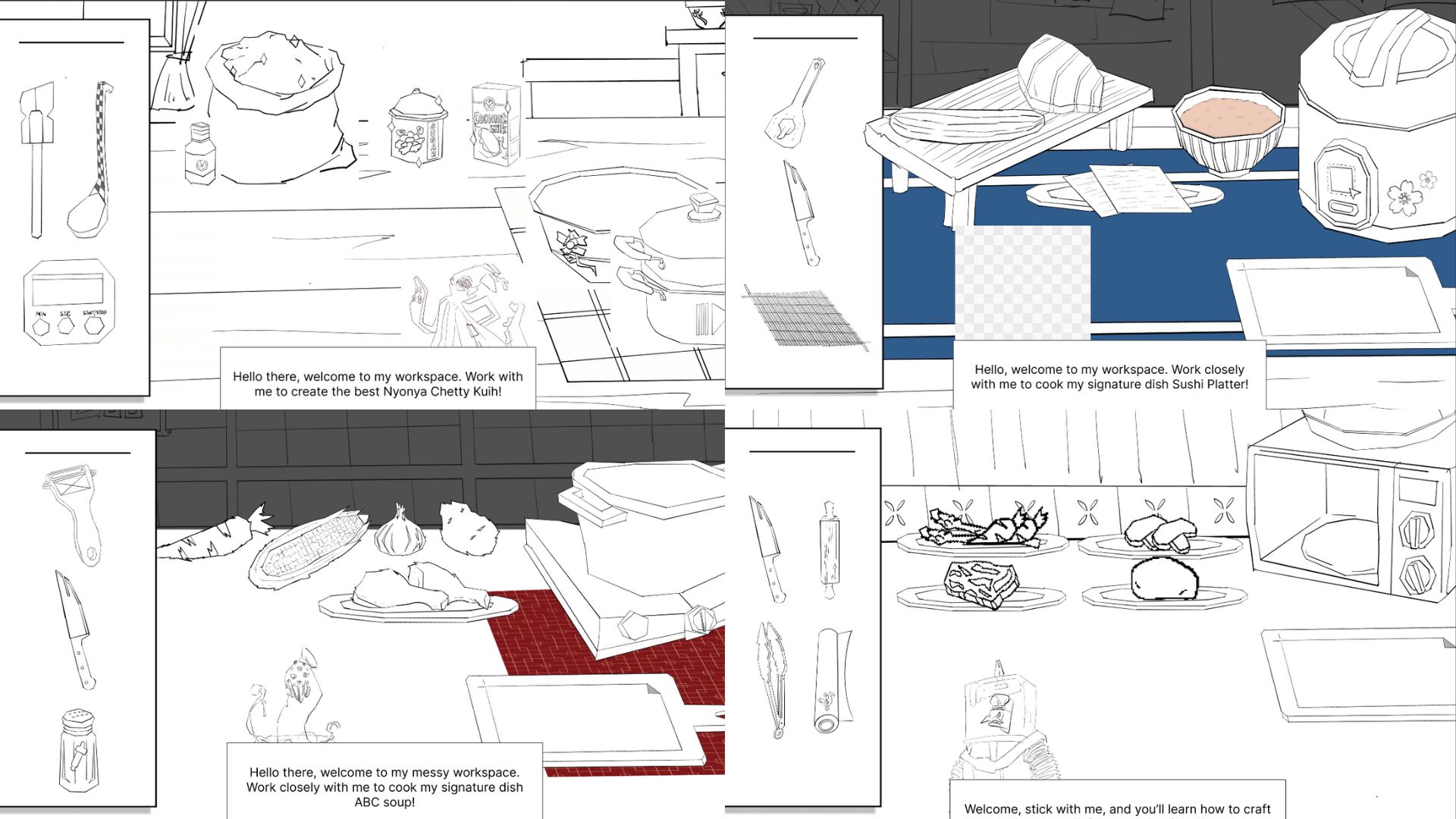
I finalized the game storyline prototypes for the remaining characters and tools, sketched the necessary in-game elements, and completed the logo design.
Lecturer Feedbacks
-Can include clearer tutorials at the beginning to let player know when to drag and click.
-Dragging instructions can be clearer.
https://www.figma.com/proto/WByM6atVpPXuevzwrjUrRT/FYP-SPACE?page-id=1%3A281&node-id=1-316&viewport=-378%2C-885%2C0.1&t=wlUh0vz39YrCkaum-1&scaling=min-zoom&content-scaling=fixed&starting-point-node-id=1%3A496&show-proto-sidebar=1 <— Click here.
Week 5
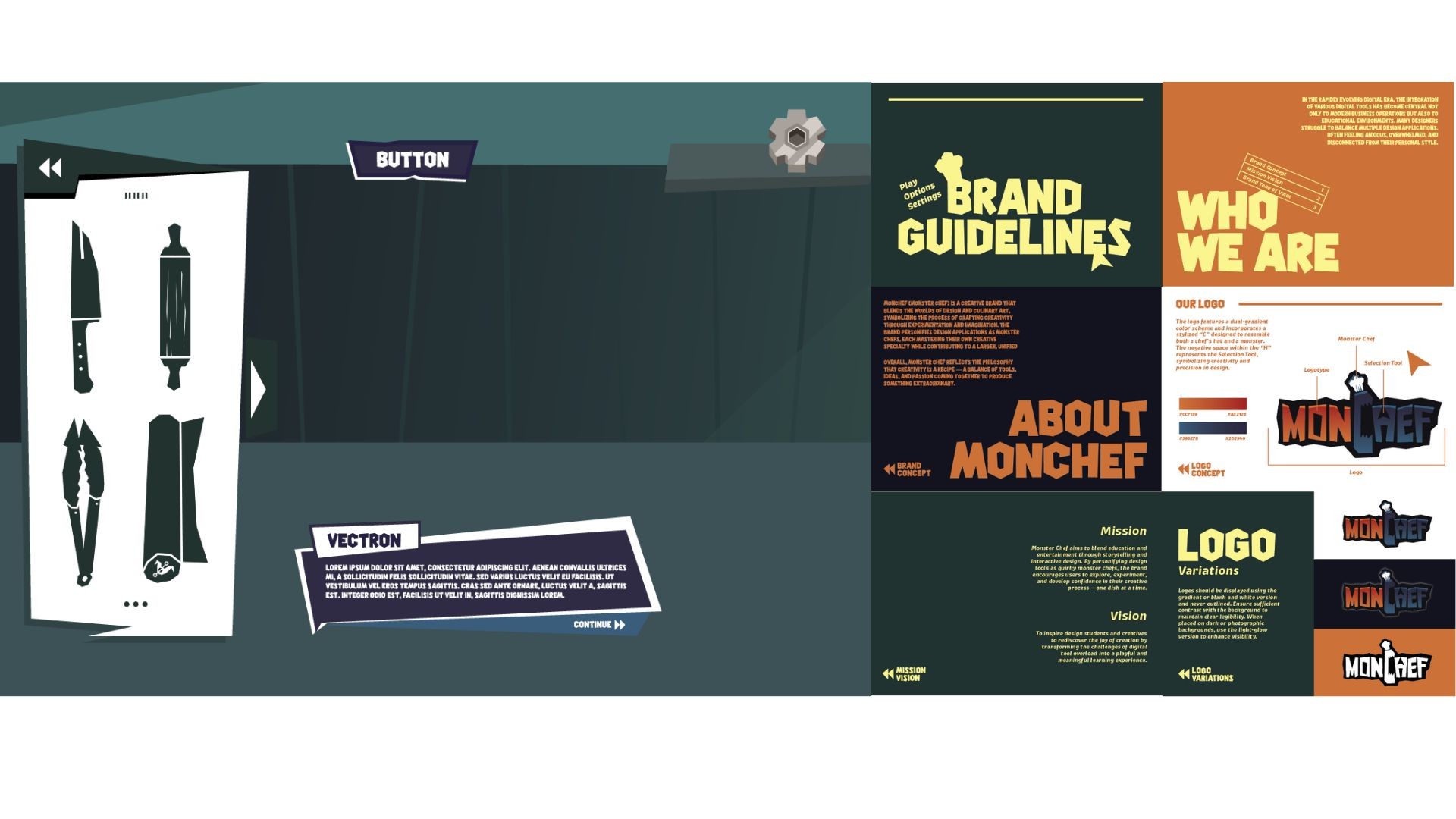
I began developing the UI elements, including tool icons, chat boxes, and the left panel frame. Additionally, I created a brand guideline to ensure visual and thematic consistency across the project. Lastly, I started preparing the proposal, which is scheduled for submission next week.
Lecturer Feedbacks
-The badge design could be refined to better align with the overall brand identity.
-Explore more color variations for the UI, as the current design does not incorporate the yellow from the brand guideline.
-Consider adding a visual representation of a leadership score system for better engagement.
Week 6-7
I finished one character and one in-game background visual for my game and few variations of badge designs for my characters. I also created a proposal for Week 7 proposal submission.
Lecturer Feedbacks
-Badge design don't have to be on the character itself, it could just be rewarded after playing the game.
-For the exhibition booth planning, the interactive sink could make it interactive with the audience to write maybe their orders? then can be placed inside the sink.
-Badge design could be improved.
-Create a personal branding and name cards.
Week 8
This week, I finished the remaining characters and more in-game UI elements/ingredients for my game and a few variations of pop out window like tutorial, setting, menu features.
Lecturer Feedbacks
-Can try using real images to vector instead of pixel to vector.
Week 9
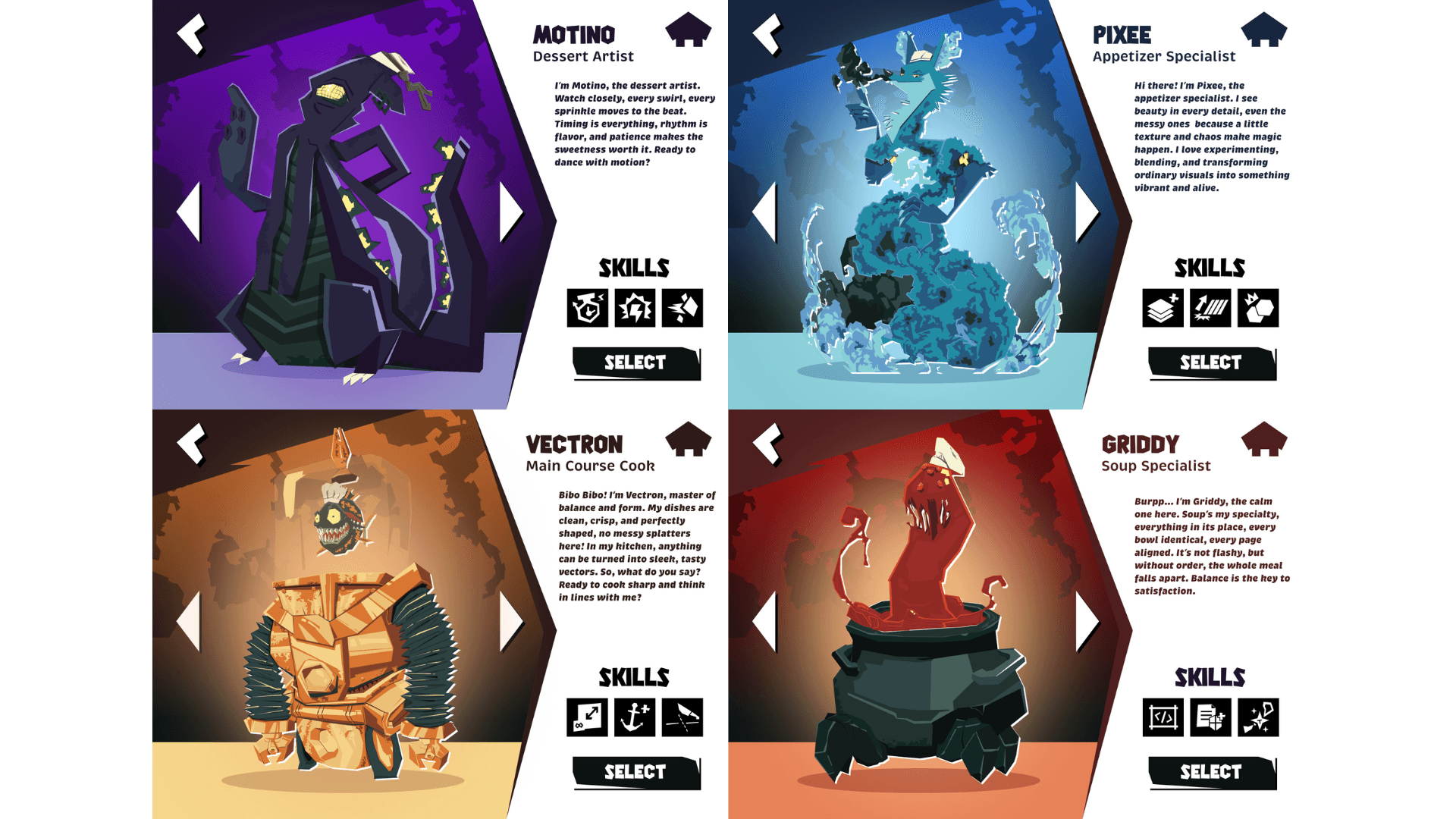
I started assembling my elements and finish the prototype for after effect's storyline and character selection scene.
Week 10
I started adding some animations into my game to make it more lively and also started with working on my exhibition materials.
Lecturer Feedbacks
-Some parts the font size is too small.
-For the mini quiz section in the game add in option to give up or skip the quiz.
Week 11
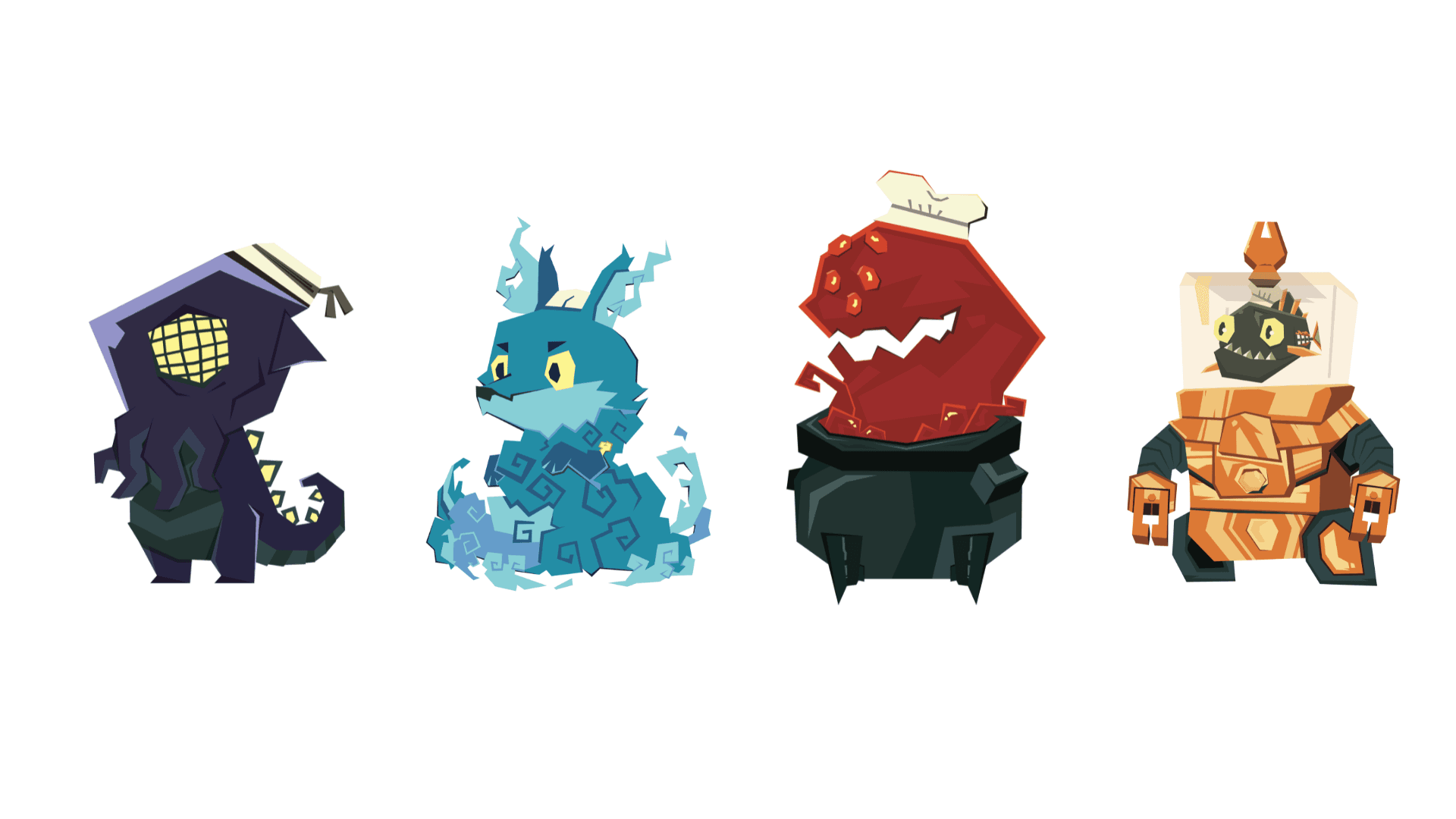
I continued developing the remaining game elements and added a chibi version of my character as well.
Week 12
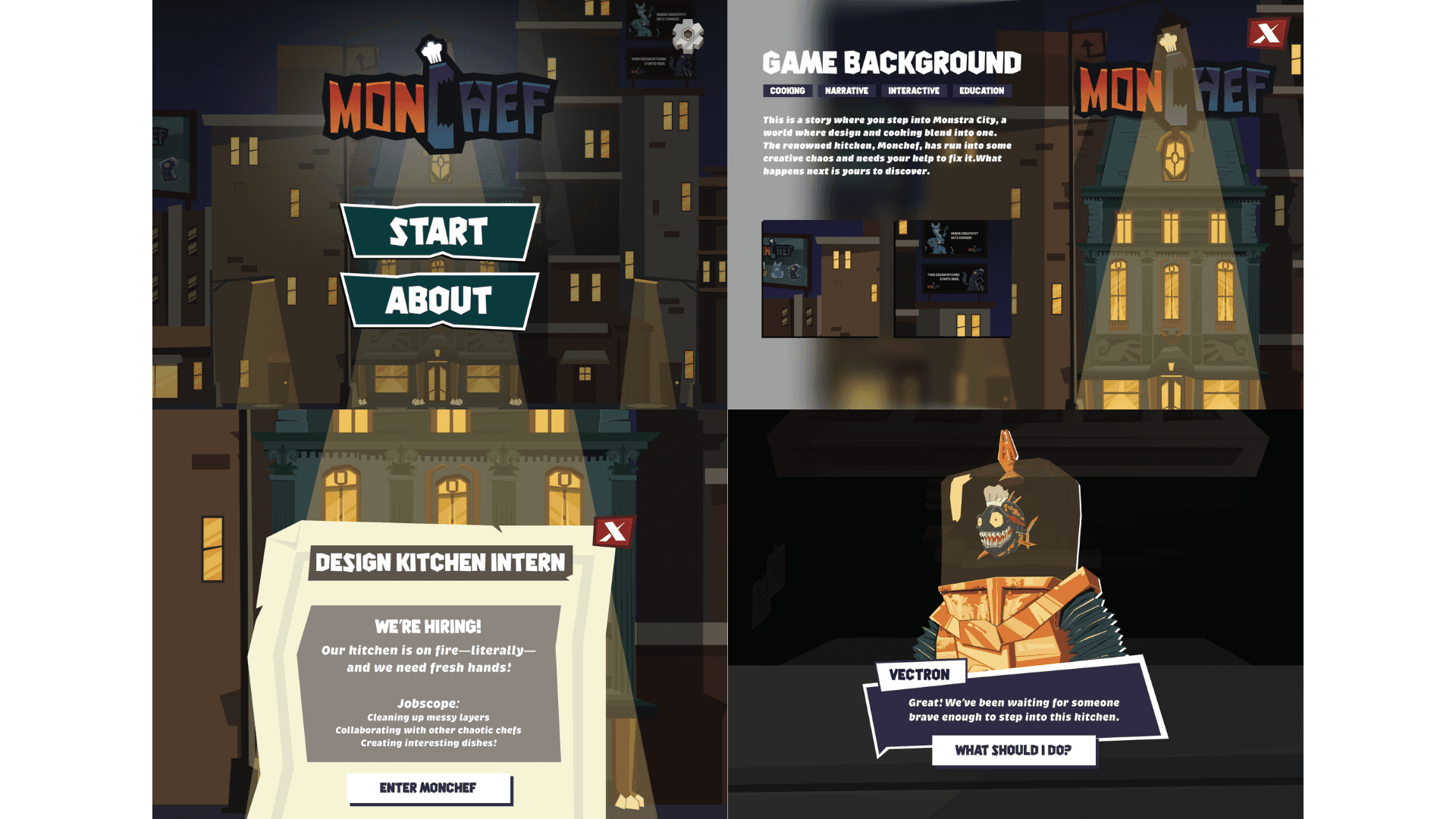
I began working on merchandise designs and packaging, and I also completed another Illustrator storyline and the opening scene of my game.
Week 13
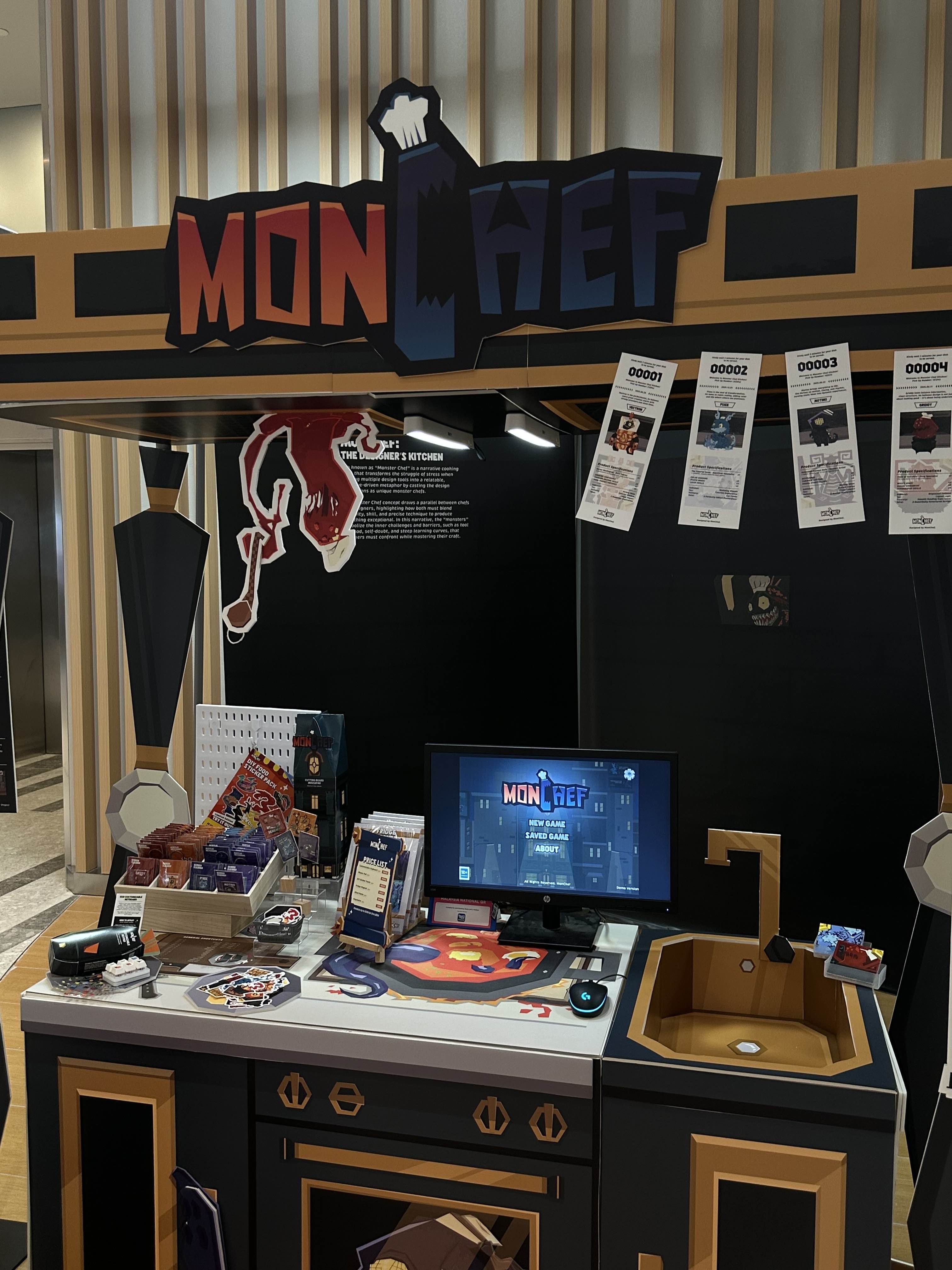
This week, I paused game development to focus on the prints and merchandise, ensuring I had enough time for assembly and reprints if needed. I worked on the exhibition foamboard printing files, including illustrations for the kitchen front, side panels, hood, and ventilation designs. I also designed the merchandise packaging and sent everything for printing as soon as it was completed.
Week 14
I continued with the remaining prints and began assembling them. In the final few days before the exhibition, I returned to working on the game and successfully completed it on the launch day, Monday.
Exhibition Outcome
Final Year Project Proposal Video
This video includes the concept, objectives, deliverable for my final year project.
Game Prototype: https://www.figma.com/proto/gGeVemYyW4dYYaCzqZURL9/Final-Year-Project?page-id=331%3A2112&node-id=1247-48557&viewport=-119%2C377%2C0.08&t=zYfM6tz1hlkmSArq-1&scaling=scale-down&content-scaling=fixed&starting-point-node-id=1247%3A48557
Week 1
This week, we began by brainstorming the design direction for our Final Year Project, building on insights from our Major Research Project. We completed the Statement of Intent to outline the problem statements and project objectives clearly. My concept focuses on creating a narrative cooking game that personifies the challenge of digital tool overload. The game turns the stress of mastering multiple design applications into a relatable, story-driven metaphor, portraying the designer as a chef and each Adobe application as a distinctive “monster chef.” (For more details, see the Statement of Intent link.)
Lecturer Feedbacks:
-Problem statement should mention that in today’s creative industry, multitasking across multiple applications is unavoidable, and managing limited time is just as critical as learning the tools themselves.
-Objectives should be clear that it is to highlight the importance of digital tools management and priorities.
-Next step is to create a framework and try to align the framework to the problem statement, think of the game structure and get feedbacks from different people.
Statement of Intent: https://docs.google.com/document/d/1sSNl_UFEG7dpBuosEz7GybiZBBvL04WiuE8hAE8OQWk/edit?usp=sharing
Week 2
I have created basic wireframes and prototype drafts in Figma, along with character sketches and detailed personality profiles. I also worked on structuring the storyline. In addition, I revised my problem statement and objectives based on the feedback received from last week’s consultation with my lecturer.
Lecturer Feedbacks
-Characters could feature multicultural dishes instead of only Western dishes.
-Since the characters and elements are inspired by Adobe tools, an ethical clearance form should be written and approved by Adobe. Alternatively, consider developing your own branding as a backup plan if approval is not granted.
-The gameplay can shift visually—for example, Illustrator’s process could begin realistically and then transform into vectors once it reaches the artboard. Similarly, other Adobe apps can transform into their respective visual styles to highlight their unique functions.
-Develop a storyline that shows how all the characters and tools work together in the end.
-Include limitations in the Statement of Intent if necessary.
-Consider strategies to sustain player engagement and encourage replayability—such as allowing players to export the final image after completing a signature dish.
-Character designs should be more distinct, clearly representing the apps. For instance, Illustrator’s robot design could incorporate symbols or logos that reinforce its identity.
Next Progress
-Finalize all character designs.
-Complete the remaining structure and storyline.
Week 3
I refined the opening scene storyline and developed a more detailed prototype for the Illustrator chapter. Additionally, I brainstormed and sketched storyline concepts for the remaining three characters — InDesign, Photoshop, and After Effects.
Lecturer Feedbacks
-Add timing to the “image → vector” transformation to show it “cooking” onscreen.
-Increase the free-play or sandbox component to improve playability.
-Make instruction arrows more noticeable—perhaps blinking or otherwise emphasized.
-Enhance interaction transitions; make them smoother and more responsive.
-Improve workspace layout so that character dialogues don’t block essential UI elements.
-Reduce text heaviness—try to streamline instructions and narrative.
-Provide an option at the beginning: play the full game with all four characters/apps, or just one. The full-game mode might be called “Campaign Dish” to reflect its larger scope.
-Include a scoring or leveling system if possible.
-Create more interesting, culturally rich names for each dish.
-Consider renaming “Nyonya Kuih” to something like “Nyonya Chitty Kuih” to better reflect multicultural (Indian, Malay, Chinese) influences.
Week 4
I finalized the game storyline prototypes for the remaining characters and tools, sketched the necessary in-game elements, and completed the logo design.
Lecturer Feedbacks
-Can include clearer tutorials at the beginning to let player know when to drag and click.
-Dragging instructions can be clearer.
https://www.figma.com/proto/WByM6atVpPXuevzwrjUrRT/FYP-SPACE?page-id=1%3A281&node-id=1-316&viewport=-378%2C-885%2C0.1&t=wlUh0vz39YrCkaum-1&scaling=min-zoom&content-scaling=fixed&starting-point-node-id=1%3A496&show-proto-sidebar=1 <— Click here.
Week 5
I began developing the UI elements, including tool icons, chat boxes, and the left panel frame. Additionally, I created a brand guideline to ensure visual and thematic consistency across the project. Lastly, I started preparing the proposal, which is scheduled for submission next week.
Lecturer Feedbacks
-The badge design could be refined to better align with the overall brand identity.
-Explore more color variations for the UI, as the current design does not incorporate the yellow from the brand guideline.
-Consider adding a visual representation of a leadership score system for better engagement.
Week 6-7
I finished one character and one in-game background visual for my game and few variations of badge designs for my characters. I also created a proposal for Week 7 proposal submission.
Lecturer Feedbacks
-Badge design don't have to be on the character itself, it could just be rewarded after playing the game.
-For the exhibition booth planning, the interactive sink could make it interactive with the audience to write maybe their orders? then can be placed inside the sink.
-Badge design could be improved.
-Create a personal branding and name cards.
Week 8
This week, I finished the remaining characters and more in-game UI elements/ingredients for my game and a few variations of pop out window like tutorial, setting, menu features.
Lecturer Feedbacks
-Can try using real images to vector instead of pixel to vector.
Week 9
I started assembling my elements and finish the prototype for after effect's storyline and character selection scene.
Week 10
I started adding some animations into my game to make it more lively and also started with working on my exhibition materials.
Lecturer Feedbacks
-Some parts the font size is too small.
-For the mini quiz section in the game add in option to give up or skip the quiz.
Week 11
I continued developing the remaining game elements and added a chibi version of my character as well.
Week 12
I began working on merchandise designs and packaging, and I also completed another Illustrator storyline and the opening scene of my game.
Week 13
This week, I paused game development to focus on the prints and merchandise, ensuring I had enough time for assembly and reprints if needed. I worked on the exhibition foamboard printing files, including illustrations for the kitchen front, side panels, hood, and ventilation designs. I also designed the merchandise packaging and sent everything for printing as soon as it was completed.
Week 14
I continued with the remaining prints and began assembling them. In the final few days before the exhibition, I returned to working on the game and successfully completed it on the launch day, Monday.
Exhibition Outcome
Final Year Project Proposal Video
This video includes the concept, objectives, deliverable for my final year project.
Game Prototype: https://www.figma.com/proto/gGeVemYyW4dYYaCzqZURL9/Final-Year-Project?page-id=331%3A2112&node-id=1247-48557&viewport=-119%2C377%2C0.08&t=zYfM6tz1hlkmSArq-1&scaling=scale-down&content-scaling=fixed&starting-point-node-id=1247%3A48557
Week 1
This week, we began by brainstorming the design direction for our Final Year Project, building on insights from our Major Research Project. We completed the Statement of Intent to outline the problem statements and project objectives clearly. My concept focuses on creating a narrative cooking game that personifies the challenge of digital tool overload. The game turns the stress of mastering multiple design applications into a relatable, story-driven metaphor, portraying the designer as a chef and each Adobe application as a distinctive “monster chef.” (For more details, see the Statement of Intent link.)
Lecturer Feedbacks:
-Problem statement should mention that in today’s creative industry, multitasking across multiple applications is unavoidable, and managing limited time is just as critical as learning the tools themselves.
-Objectives should be clear that it is to highlight the importance of digital tools management and priorities.
-Next step is to create a framework and try to align the framework to the problem statement, think of the game structure and get feedbacks from different people.
Statement of Intent: https://docs.google.com/document/d/1sSNl_UFEG7dpBuosEz7GybiZBBvL04WiuE8hAE8OQWk/edit?usp=sharing
Week 2
I have created basic wireframes and prototype drafts in Figma, along with character sketches and detailed personality profiles. I also worked on structuring the storyline. In addition, I revised my problem statement and objectives based on the feedback received from last week’s consultation with my lecturer.
Lecturer Feedbacks
-Characters could feature multicultural dishes instead of only Western dishes.
-Since the characters and elements are inspired by Adobe tools, an ethical clearance form should be written and approved by Adobe. Alternatively, consider developing your own branding as a backup plan if approval is not granted.
-The gameplay can shift visually—for example, Illustrator’s process could begin realistically and then transform into vectors once it reaches the artboard. Similarly, other Adobe apps can transform into their respective visual styles to highlight their unique functions.
-Develop a storyline that shows how all the characters and tools work together in the end.
-Include limitations in the Statement of Intent if necessary.
-Consider strategies to sustain player engagement and encourage replayability—such as allowing players to export the final image after completing a signature dish.
-Character designs should be more distinct, clearly representing the apps. For instance, Illustrator’s robot design could incorporate symbols or logos that reinforce its identity.
Next Progress
-Finalize all character designs.
-Complete the remaining structure and storyline.
Week 3
I refined the opening scene storyline and developed a more detailed prototype for the Illustrator chapter. Additionally, I brainstormed and sketched storyline concepts for the remaining three characters — InDesign, Photoshop, and After Effects.
Lecturer Feedbacks
-Add timing to the “image → vector” transformation to show it “cooking” onscreen.
-Increase the free-play or sandbox component to improve playability.
-Make instruction arrows more noticeable—perhaps blinking or otherwise emphasized.
-Enhance interaction transitions; make them smoother and more responsive.
-Improve workspace layout so that character dialogues don’t block essential UI elements.
-Reduce text heaviness—try to streamline instructions and narrative.
-Provide an option at the beginning: play the full game with all four characters/apps, or just one. The full-game mode might be called “Campaign Dish” to reflect its larger scope.
-Include a scoring or leveling system if possible.
-Create more interesting, culturally rich names for each dish.
-Consider renaming “Nyonya Kuih” to something like “Nyonya Chitty Kuih” to better reflect multicultural (Indian, Malay, Chinese) influences.
Week 4
I finalized the game storyline prototypes for the remaining characters and tools, sketched the necessary in-game elements, and completed the logo design.
Lecturer Feedbacks
-Can include clearer tutorials at the beginning to let player know when to drag and click.
-Dragging instructions can be clearer.
https://www.figma.com/proto/WByM6atVpPXuevzwrjUrRT/FYP-SPACE?page-id=1%3A281&node-id=1-316&viewport=-378%2C-885%2C0.1&t=wlUh0vz39YrCkaum-1&scaling=min-zoom&content-scaling=fixed&starting-point-node-id=1%3A496&show-proto-sidebar=1 <— Click here.
Week 5
I began developing the UI elements, including tool icons, chat boxes, and the left panel frame. Additionally, I created a brand guideline to ensure visual and thematic consistency across the project. Lastly, I started preparing the proposal, which is scheduled for submission next week.
Lecturer Feedbacks
-The badge design could be refined to better align with the overall brand identity.
-Explore more color variations for the UI, as the current design does not incorporate the yellow from the brand guideline.
-Consider adding a visual representation of a leadership score system for better engagement.
Week 6-7
I finished one character and one in-game background visual for my game and few variations of badge designs for my characters. I also created a proposal for Week 7 proposal submission.
Lecturer Feedbacks
-Badge design don't have to be on the character itself, it could just be rewarded after playing the game.
-For the exhibition booth planning, the interactive sink could make it interactive with the audience to write maybe their orders? then can be placed inside the sink.
-Badge design could be improved.
-Create a personal branding and name cards.
Week 8
This week, I finished the remaining characters and more in-game UI elements/ingredients for my game and a few variations of pop out window like tutorial, setting, menu features.
Lecturer Feedbacks
-Can try using real images to vector instead of pixel to vector.
Week 9
I started assembling my elements and finish the prototype for after effect's storyline and character selection scene.
Week 10
I started adding some animations into my game to make it more lively and also started with working on my exhibition materials.
Lecturer Feedbacks
-Some parts the font size is too small.
-For the mini quiz section in the game add in option to give up or skip the quiz.
Week 11
I continued developing the remaining game elements and added a chibi version of my character as well.
Week 12
I began working on merchandise designs and packaging, and I also completed another Illustrator storyline and the opening scene of my game.
Week 13
This week, I paused game development to focus on the prints and merchandise, ensuring I had enough time for assembly and reprints if needed. I worked on the exhibition foamboard printing files, including illustrations for the kitchen front, side panels, hood, and ventilation designs. I also designed the merchandise packaging and sent everything for printing as soon as it was completed.
Week 14
I continued with the remaining prints and began assembling them. In the final few days before the exhibition, I returned to working on the game and successfully completed it on the launch day, Monday.
Exhibition Outcome
Reflection
Reflection
Reflection
This Final Year Project was a challenging yet rewarding journey that allowed me to apply and strengthen both my creative and practical skills. Through the development of MonChef, I explored how design, illustration, and interactive gameplay can be combined to create an engaging learning experience. Translating design tools and concepts into a game format pushed me to think creatively about storytelling, user interaction, and visual communication, while still maintaining clarity and purpose.
One of the biggest challenges I faced was time management. As the exhibition approached, I had to make strategic decisions, such as temporarily pausing game development to focus on prints, foamboards, and merchandise. This experience taught me the importance of prioritization, planning ahead, and allowing buffer time for printing, assembly, and potential reprints. Balancing digital work with physical production helped me understand real-world design workflows more deeply.
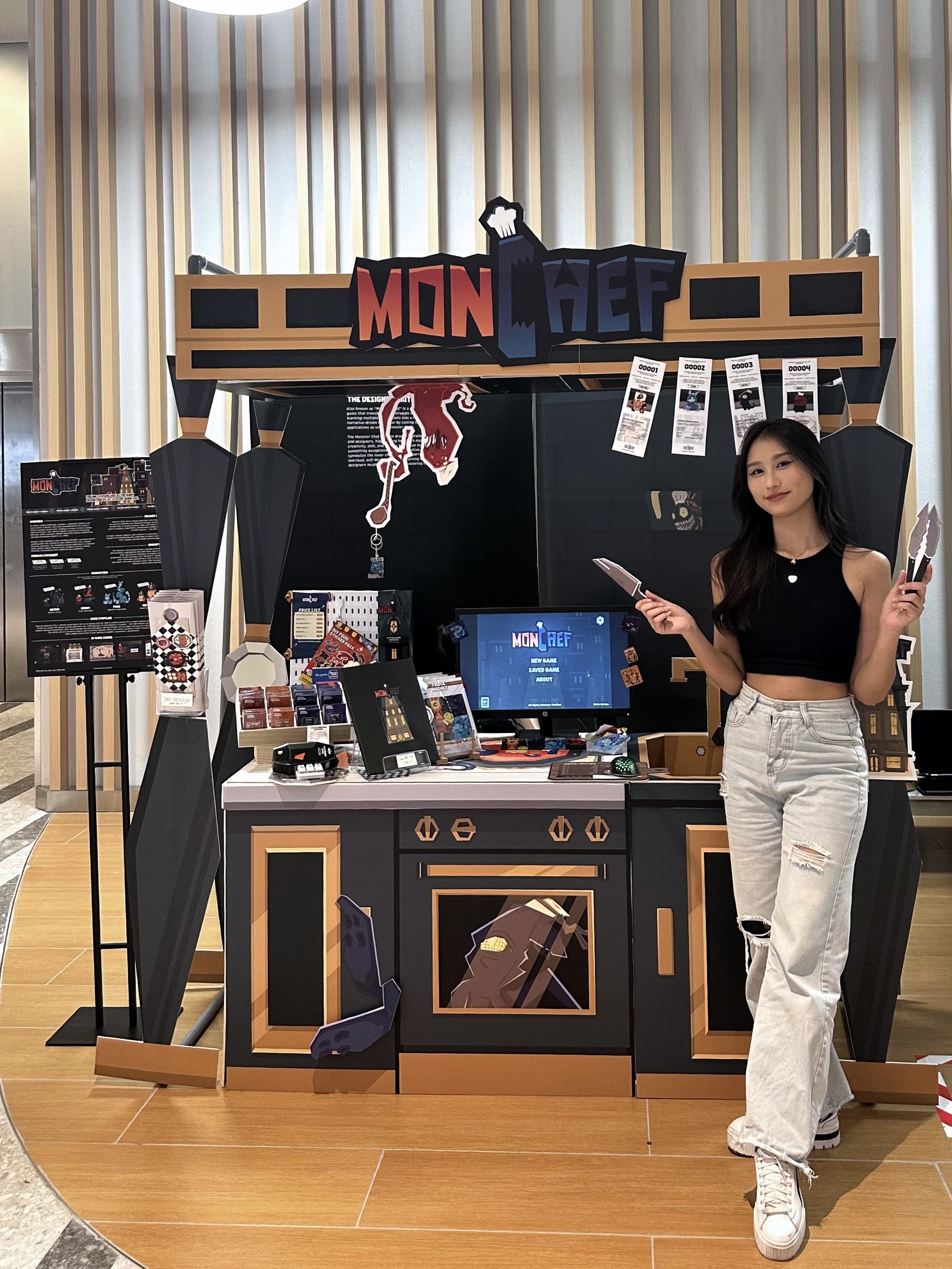
The exhibition preparation process also enhanced my problem-solving skills. From designing the immersive kitchen-themed booth to finalizing merchandise packaging, I learned how small design decisions can significantly impact overall presentation and audience experience. Completing the game just in time for the launch day was both stressful and fulfilling, reinforcing the value of persistence and adaptability under pressure.
Overall, this FYP helped me grow not only as a designer but also as an individual. I gained greater confidence in managing a large-scale project independently, communicating my ideas clearly, and trusting my creative direction. Most importantly, this project clarified my interest in interactive design and reinforced my motivation to continue improving my skills in UI/UX, game-based learning, and visual storytelling in the future.
Second assessor feedback: The concept is very interesting and educational, especially for people who are not familiar with Adobe software. One area for improvement is the DIY sticker book, as the overall design does not fully match that particular merchandise.
This Final Year Project was a challenging yet rewarding journey that allowed me to apply and strengthen both my creative and practical skills. Through the development of MonChef, I explored how design, illustration, and interactive gameplay can be combined to create an engaging learning experience. Translating design tools and concepts into a game format pushed me to think creatively about storytelling, user interaction, and visual communication, while still maintaining clarity and purpose.
One of the biggest challenges I faced was time management. As the exhibition approached, I had to make strategic decisions, such as temporarily pausing game development to focus on prints, foamboards, and merchandise. This experience taught me the importance of prioritization, planning ahead, and allowing buffer time for printing, assembly, and potential reprints. Balancing digital work with physical production helped me understand real-world design workflows more deeply.
The exhibition preparation process also enhanced my problem-solving skills. From designing the immersive kitchen-themed booth to finalizing merchandise packaging, I learned how small design decisions can significantly impact overall presentation and audience experience. Completing the game just in time for the launch day was both stressful and fulfilling, reinforcing the value of persistence and adaptability under pressure.
Overall, this FYP helped me grow not only as a designer but also as an individual. I gained greater confidence in managing a large-scale project independently, communicating my ideas clearly, and trusting my creative direction. Most importantly, this project clarified my interest in interactive design and reinforced my motivation to continue improving my skills in UI/UX, game-based learning, and visual storytelling in the future.
Second assessor feedback: The concept is very interesting and educational, especially for people who are not familiar with Adobe software. One area for improvement is the DIY sticker book, as the overall design does not fully match that particular merchandise.
This Final Year Project was a challenging yet rewarding journey that allowed me to apply and strengthen both my creative and practical skills. Through the development of MonChef, I explored how design, illustration, and interactive gameplay can be combined to create an engaging learning experience. Translating design tools and concepts into a game format pushed me to think creatively about storytelling, user interaction, and visual communication, while still maintaining clarity and purpose.
One of the biggest challenges I faced was time management. As the exhibition approached, I had to make strategic decisions, such as temporarily pausing game development to focus on prints, foamboards, and merchandise. This experience taught me the importance of prioritization, planning ahead, and allowing buffer time for printing, assembly, and potential reprints. Balancing digital work with physical production helped me understand real-world design workflows more deeply.
The exhibition preparation process also enhanced my problem-solving skills. From designing the immersive kitchen-themed booth to finalizing merchandise packaging, I learned how small design decisions can significantly impact overall presentation and audience experience. Completing the game just in time for the launch day was both stressful and fulfilling, reinforcing the value of persistence and adaptability under pressure.
Overall, this FYP helped me grow not only as a designer but also as an individual. I gained greater confidence in managing a large-scale project independently, communicating my ideas clearly, and trusting my creative direction. Most importantly, this project clarified my interest in interactive design and reinforced my motivation to continue improving my skills in UI/UX, game-based learning, and visual storytelling in the future.
Second assessor feedback: The concept is very interesting and educational, especially for people who are not familiar with Adobe software. One area for improvement is the DIY sticker book, as the overall design does not fully match that particular merchandise.